
“Innvestigating” Hauntings at the Stone Lion Inn
As mentioned previously, every fall I teach a course called “Science vs Pseudoscience” that...
Every fall I teach a course called “Science vs Pseudoscience” that is, by far, my favorite class....
So, apparently the chief sponsor of the SOPA bill (aka Stop Online Piracy Act aka the Let the Government...
In any reasonable library or bookstore, an adult can walk in and find numerous books that allow him or her to learn about evolutionary theory to their heart's content. Adults can even turn on their television or computer and find loads of documentaries on the subject if they don't want to read about it. But where can children learn about evolution, especially as the teaching of it is still so (ridiculously) controversial?
Last month, I had the pleasure of presenting at the 2013 Skeptics of Oz conference in Wichita, Kansas. Below...
Below is my latest interview, conducted excellently by Jonathan MS Pearce of the Skeptic Ink blog A Tippling...
In exciting news, I just published two short texts on psychopathology. One is on anxiety disorders, while...
This morning, the Skeptic Ink Network launched it’s newest venue – SINergy. SINergy is going to...
It should come as no surprise to my regular readers that I a) am a clinical psychologist and b) despise pseudoscientific nonsense. As such, when I come across woo in my field, I feel a special fire begin to burn deep inside me and it's not because I missed taking my Pepcid. No, it's from having the field I have devoted the past 16 years of my life to dragged through the mud and made to look silly by those who are not actually practicing evidence-based psychology.
On campus (thanks to my advising of the UCO Skeptics) I am known as the resident skeptic of the...
This is the fifth and final installment of my series on what we know (and don’t know) about...
I’ve written about Dr Oz before (here and here) and it’s obvious that I think he’s a...
This is the fourth installment of my five part series on what we know (and don’t know) about...
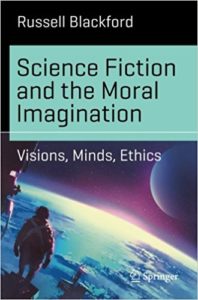
My fellow SINner Russell Blackford has put up a post called "Down syndrome, disability, academic freedom" that he is getting a lot of flack about. In it, he defended the rights of Professor D Gareth Jones of Otago University to publish an academic paper called "Testing times: do new prenatal tests signal the end of Down syndrome?" In this open-access article, Professor Jones and his co-author (a student) discuss the current state of prenatal screening for Down Syndrome (DS) in New Zealand and possible implications.
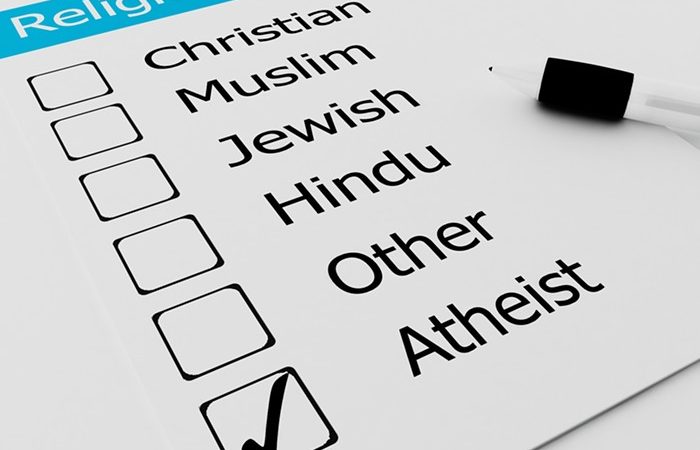
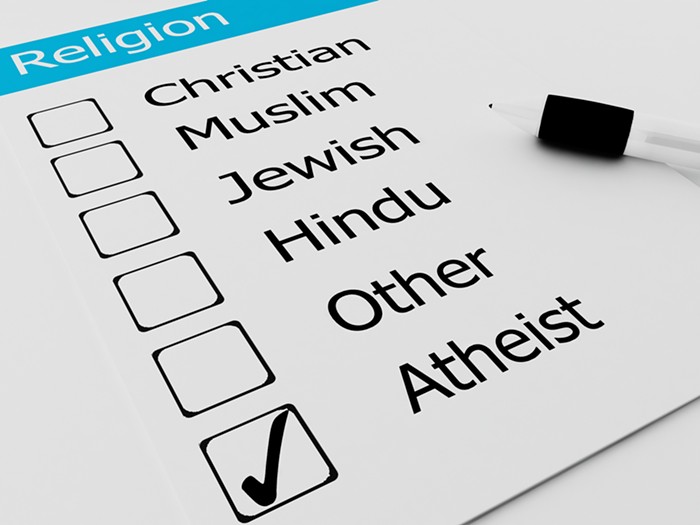
This post will review what we know, based on large studies and surveys, about the religious beliefs of scientists. As scientists are generally considered to be highly intelligent, this is an area of research relevant to the central question of this series - are non-theists smarter than theists?
I've spent the last two days attending and presenting at the Heartland eLearning Conference. It's a really great conference, with fantastic speakers (Michael Wesch, Lee Crocket, Alec Couros, Mark Milliron, and dozens more over the past couple of years) and I leave excited and inspired every year.
This is the second installment of my five part series on what we know (and don't know) about intelligence and religion. Inspired by questions about and challenges to a video I was in, particularly questions about my statement that the religious are not more or less intelligent than the non-religious. In part one, I introduced the series by briefly discussing some of the very diverse areas of one's life that are impacted by your religious belief system.
As I have previously posted, I did a couple of short videos with Seth "The Thinking Atheist" Andrews on the psychology of belief. Overall, the response has been great so far, with almost 20,000 views in the first 24 hours of release. However, one of those has generated a bit of heat and controversy in the comments section, as several people have questioned my statement in the video that people who are religious are not less intelligent than those who are non-religious.
I was interviewed this past week by Seth "The Thinking Atheist" Andrews, who was interested in talking about what psychology has to say about belief. Specifically, we talked about intelligence and religion, biases, babies, and the scientific method. Check out the videos below.
Yes, yes, I know I am about seventeen years late to the game, but thought I would let you all know I’m...
The placebo effect is one of the most powerful, and yet most mysterious, effects seen in medicine and health...
In short, the answer is yes. Recent research by computer scientists Kris Hauser and Casey Bennett at Indiana...
As the tragedies over the past year (mass shootings, natural disasters, man-made disasters, and accidents)...
As far back as I can remember, I have been a picky eater. My parents will recount stories of how I ate...
One thing that might surprise my readers on the coasts and elsewhere in the world is that, living in...
Well, it’s January again here in Oklahoma (and everywhere else on Earth, I suppose). That means two...
As you have heard, President Obama was sworn into office for his second term today (and well done on...
I am a psychologist, a professor, a scientific skeptic, and a freethinker. So when I see a headline like...
This is the final in a three part series on the difficulties with defining “mental disorders.” In...
I have posted previously on the work of my fellow Oklahoman Monty Harper, an award winning children’s...