
Pages Menu
TwitterRssFacebook
Categories Menu

Posted by on Jan 9, 2013 in Uncategorized | 36 comments

There’s No Point Shutting Down Sharing Sites

There’s No Point Shutting Down Sharing Sites

Copyright multi-nationals have done almost everything they can (remember SOPA?) to stop people from sharing or using what they already bought and is rightfully theirs whatever way they see fit.

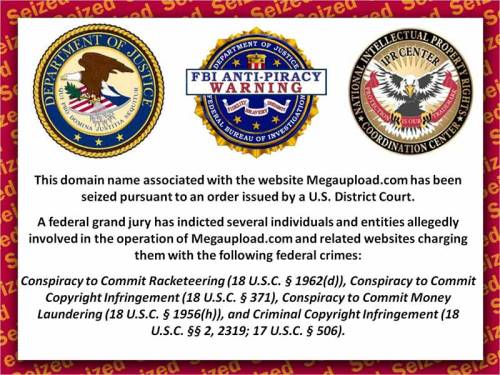
Now, Northeastern University in Boston has published a study which states that censuring or shutting down pirate sites does not work to prevent Internet users from sharing copyrighted content.

This is the conclusion of the study:

There is a cat-and-mouse game between uploaders and copyright owners, where pirated content is being uploaded bythe former and deleted by the latter, and where new One-Click Hosters and direct download sites are appearing while others are being shut down. Currently, this game seems to be in favour of the many pirates who provide far more content thanwhat the copyright owners are taking down. This imbalance of powers, together with the size and diversity of the One-Click Hosting ecosystem, suggest that anti-piracy laws toreduce the availability and reachability of pirated contentmay be less successful than what their proponents might expect.

So there you go: update your freaking business model or quit.
It’s puzzling how these cultural industries whine about how broke they will be if piracy doesn’t come to an end, but nevertheless, they pay billions of dollars on lobbies.

  • SmilodonsRetreat

    We’re trying to develop functional laws to govern the internet when the average SCOTUS judge can’t tell the difference between a cell-phone and a pager.

    The internet community will ALWAYS be faster and more nimble than any government or large business.

    • http://de-avanzada.blogspot.com/ Daosorios

      Right on the money!

    • Ingemar Oseth

      “We’re trying to develop functional laws to govern the internet when the
      average SCOTUS judge can’t tell the difference between a cell-phone and a
      pager.”

      Do you have evidence for this broad statement?

      • SmilodonsRetreat

        Sorry, it was e-mail and a pager. From the SCOTUS City of Ontario vs. Quon case (2009). My info is from here: http://lawyersusaonline.com/dcdicta/2010/04/19/technical-difficulties-at-the-supreme-court-2/

        • Ingemar Oseth

          Thank You.

          What of the Justices who were not mentioned in the article? By my count the familiarity of a majority of the Justices (5:4) remains unknown.

          Do you suppose that in the 3 years that have passed since the article was written that the average Justice is so fully uninformed?

          • SmilodonsRetreat

            I consider myself reasonably well-informed and there’s a lot about current IP and tech cases that I don’t have a clue on. I really feel sorry for them and the lawyers more than anything else.

            The SCOTUS judges are reasonably intelligent or they wouldn’t be there. But it’s like me trying to explain the networking setup in my soon to be built home to my senior citizen mother and then ask her to make a binding decision on it that I’ll have to live with until I sell the house (hopefully never).

            I’m sure they are excellent judges (except for Thomas), but they don’t have the technical experience and knowledge to be deciding cases like this. Of course, it’s not really their fault as the US government doesn’t have the ability to make laws that make sense concerning state-of-the-art technology or global infrastructure (like the internet).

          • Ingemar Oseth

            We agree on Thomas. I’ve never had a good feeling about the man’s qualifications to be a Justice.

            “The SCOTUS judges are reasonably intelligent or they wouldn’t be there.
            But it’s like me trying to explain the networking setup in my soon to
            be built home to my senior citizen mother and then ask her to make a
            binding decision on it that I’ll have to live with until I sell the
            house (hopefully never).”

            Given the pace of innovation I think anyone except perhaps a real expert would be hard put to make a long term, binding decision about a networking system for their home.

            That said, I’m not entirely convinced that oral arguments at SCOTUS tell the whole story regarding the preparedness of Justices. It is my understanding that the Justices and their staffs conduct a great deal of research before deciding cases. Part of this research is contained in the often numerous amicus briefs and similar documents that are filed for and against cases under consideration. This leads me to the conclusion that the Justices come to understand the various components of a case well enough to make informed decisions.

  • darkkodiak

    The thing that always boggle my mind is why won’t these companies try to profit from shared content. I mean they already profit from the distribution of sharing software. Then again, this is more about control of content than profits XD. I’m going to quote Gabe Newell on the topic:

    “We think there is a fundamental misconception about piracy. Piracy is almost always a service problem and not a pricing problem. If a pirate offers a
    product anywhere in the world, 24 x 7, purchasable from the convenience
    of your personal computer, and the legal provider says the product is
    region-locked, will come to your country 3 months after the US release,
    and can only be purchased at a brick and mortar store, then the pirate’s
    service is more valuable.”

    • http://de-avanzada.blogspot.com/ Daosorios

      Well, that’s almost always! But when they won’t allow you to lend your brand new GTA to a friend, well, that’s not “almost always”.

      It’s like cassettes: you should be able to do whatever you want with your property – even if that means reproducing it!

      It’d be another thing if you were profitting from it. I guess, that’s when Newells words are more relevant.

  • An Artist

    They could change their business model, sure, or perhaps people could just honour the fact that copyright is a consent issue. A work produced and covered by copyright has with it certain consents, conditions under which a person may access the work, like paying a certain price, and not duplicating and redistributing. If a person accesses the work contrary to those conditions, they are having it without consent.

    We call an artist’s work their “body of work” for reasons that go beyond quirks or habits of language. It acknowledges the very real and direct connection between an artist and their creations, as extensions of themselves. Perhaps if people were willing to acknowledge that the question of consent relating to an artist’s body of work is no less real than the question of consent relating to an artist’s body, then we wouldn’t have to worry about these sorts of laws.

    • http://de-avanzada.blogspot.com/ Daosorios

      Copyright is not a consent issue. Is not like you are bargaining in order to get to a contract you like! You like this software? Ok – pay for it, and if your wife wants to use it, she must also pay for it, and if you want to show it to friends, they must pay again for it.

      Who’d consent that?

      “not duplicating and redistributing”

      Yeah, well. Tell that to people who has been jailed for playing for free the songs they bought at a party! That’s not duplicating nor redistributing!

      • An Artist

        “Copyright is not a consent issue. Is not like you are bargaining in order to get to a contract you like! ”

        Actually that’s exactly what copyright is. Just because one party in a bargain has conditions, even non-negotiable ones, like price, does not make it any less a bargain. That’s why Copyright is a civil issue in most territories, and court cases are pursued by rights organisations, not government prosecutors, because copyright fraud is a breach of a sale / licensing contract.

        If people don’t like the conditions of a product there’s a simple solution, don’t patronise it until the conditions are changed. If however, they take the benefit of the work by force, by ignoring consent, then IMHO they should be harried to the ends of the earth.

        Artists, in common with prostitutes, trade in a commodity unique and personal to themselves. Perhaps if people thought “what would I do if this were a prostitute” before advocating taking an artist’s work against the terms of that artist’s consent, they would see things from the other perspective. No amount of “this is a better business model” economic rationale changes the fact that some artists simply don’t want their work offered the way free-culture advocates* want it. What is so hard to understand about a simple “No means NO”?

        *Who seem to have a strong financial interest in “free” art, either by owning ad-supported distribution networks, or by becoming professional politicians / speakers / advocates.

        Gabe Newell can talk as long as he likes about what’s “better” or what makes a solution, but if a game makes says “no, I don’t want my game on your network”, Valve doesn’t take it and put it up on Steam all the same. People seem to be willing to quote his words, but not follow his example.

        “Yeah, well. Tell that to people who has been jailed for playing for free the songs they bought at a party! That’s not duplicating nor redistributing!”

        They bought a licence to a product that contained explicit restrictions to consent on how it was to be used, including the performance to groups of people over a certain size (this is why venues and shops pay music performance fees, to compensate the artists for the benefit the venue / shop receives as a result of having that music). They broke that contract and violated the consent. They should have brought music that was covered by a less restrictive contract, or hired a live band playing original material.

        • http://de-avanzada.blogspot.com/ Daosorios

          I’m sorry – no one gets to tell me how to use MY private property. No one is entitled to sell me stuff as long as I don’t do this or don’t do that. That’s why I buy it for, in the first place: to use it however I see fit!! You don’t like it? Too bad – don’t sell it.

          WTF about prostitutes? What are you talking about?!?

          So, “artists” record each song, just one time. They’re being paid that one time with the first DVD. The rest is just ctrl+c & ctrl+v, so excuse me if I don’t buy the whole “commodity unique and personal to themselves” and “an artist’s work” things! So much work – a one time thing they keep on getting paid forever!!! Yeah, super-fair!

          How fair and square monopolies are, right?!? Poor, little Charlie Sheen, who’s only got one more house than Mitt Romney!!

          • An Artist

            “I’m sorry – no one gets to tell me how to use MY private property. No one is entitled to sell me stuff as long as I don’t do this or don’t do that. That’s why I buy it for, in the first place: to use it however I see fit!! You don’t like it? Too bad – don’t sell it.”

            In most territories, the law disagrees with your stance.

            Intellectual property is sold/licensed according to the conditions laid down by the seller/IP holder, and said conditions are moderated by the governing authority within the territory.

            The medium you buy the IP upon is your property – the CD itself, the content contained within is not. It never has been. You have a licence to use that IP, and nothing more. This is why it is against the law to photocopy a significant portion of a book, and distribute those photocopies. You own the book, and are free to sell it, but you may not separate possession of the benefit of the book, its content, from the physical format.

            A prostitute is the best analogy to an artist, in that they both sell an ephemeral service or product which is wholly dependent on consent issues. Since most people in the free-culture advocacy camp are unable or unwilling to acknowledge the validity of opposing stances, I decided to employ a metaphor that my be easier to empathise with. Why not study this idea from someone else’s perspective?

            “So, “artists” record each song, just one time. They’re being paid that one time with the first DVD.”

            All things are priced according to the estimated benefit they provide the buyer, not according to the amount they cost the maker.

            Do you really think that a single DVD sale should be the economic payoff for a lifetime of training and the huge upfront time and financial investment an artist makes to produce their work?

            What is it that makes you feel entitled to dictate the terms under which something in which you played no part in creating should be made available to you? Do you feel entitled to set specific profit ratios, and returns on investment for an artist’s work?

            What do you do when you receive “No” as an answer in other situations?

            “So much work – a one time thing they keep on getting paid forever!!! Yeah, super-fair!”

            Yes, like every landlord and shareholder. Buy an apartment once, get to charge rent forever. Buy shares once, get to receive dividends forever. The only differences are that in crating new art, an artist does not prevent others from creating their own art, unlike finite resources like land whose ownership deprives the rest of society of their availability. Also, an artist’s descendants have the income-generating Intellectual Property capital taken from them by the state some 70 years after the death of said artist.

            I don’t understand where you get this “fair” thing from. How would you getting any artform free be “fair”. It’s not like it costs you every time an artist makes a new work. Noone’s forcing you to buy music, it’s not food, clothing or shelter. You don’t require it to live.

            “How fair and square monopolies are, right?!? Poor, little Charlie Sheen, who’s only got one more house than Mitt Romney!!”

            Intellectual property is a monopoly. That’s the point – the granting of a monopoly to be the sole economic beneficiary of something that *would not exist* if the creator of that IP had not made it. Much the same way that a landlord has a monopoly on the income earning potential of the properties they own, or a shareholder has a monopoly on the income earning potential of the shares they own.

            How about instead of copyright, everyone pays a tax so that every artist can be paid the average wage for their culture to work on producing their art, and of course to cover the costs of making said art? Then you could share the work all you like. Or is it just that you have a fundamental problem with paying for things that you can find a way to get for free?

          • http://twitter.com/fengardice Fabio García

            LOL @ the proposal for artistic socialism (not to say there aren’t some structures like that already)

          • http://de-avanzada.blogspot.com/ Daosorios

            I know!

          • An Artist

            Yes well, I had to come up with an idea as ludicrous and self-evidently idiotic as the self-entitled “gimme what I want how I want it or I’ll take it” attitude of theftculture advocates.

            To say nothing for the fact that we certainly do have the worst aspects of socialism in the arts already, with the state seizing and redistributing artist’s capital from their descendants after 70 years.

          • http://de-avanzada.blogspot.com/ Daosorios

            “The medium you buy the IP upon is your property – the CD itself, the content contained within is not.”

            Of course it is. That’s the whole point of buying the CD.

            “Buy an apartment once, get to charge rent forever.”

            You are leasing the apartment just once. It’s not like you can copy-paste apartments.

            “How about instead of copyright, everyone pays a tax so that every artist can be paid the average wage for their culture to work on producing their art, and of course to cover the costs of making said art? Then you could share the work all you like.”

            Fine by me. I should be able to share whatever I buy without being charged of anything as long as I’m not profitting.

          • An Artist

            “Of course it is. That’s the whole point of buying the CD.”

            No, it’s not. In almost all territories, the law is clear on this point. Just because you want things to be a certain way, doesn’t mean that’s the way they are. A cd is a convenient carrying object for a piece of intellectual property whose consent conditions require that it only be available to one possessor at a time. You cannot distribute copies, and you cannot keep format shifted personal use copies once you sell or give away the CD itself.

            “You are leasing the apartment just once. It’s not like you can copy-paste apartments.”

            The copy paste argument is irrelevant – Economic goods and services are priced and sold based upon the benefit received by the purchaser, not the cost incurred by the seller. If two people have the benefit of something, then the creator of that thing is entitled to two lots of economic return, even if the expense to the creator per extra unit is zero.

            “Fine by me. I should be able to share whatever I buy without being charged of anything as long as I’m not profitting.”

            And if what you meant by “sharing” resulted in many people having access to something which only one person could use at any one time, that would be fine, it would be the exact model that public libraries operate under. The result of one sale remains one unit of benefit from that product.

            But that’s not the version of sharing you’re advocating, is it? You’re looking for the version where you keep full access to the benefit of the intellectual property, while also giving others simultaneous full access to the benefit of the property. In effect creating potentially unlimited units of benefit, from only one sale.

            The fact that you’re not profiting is also irrelevant. Every time you made a duplicate for someone else, you are denying the sale income to the creator of that thing. You are just as much a thief as someone who steals a lottery winnings check from the winner’s mailbox.

            You still haven’t addressed the fundamental economic and ethical question. Why should you, or anyone else, be more entitled to get the benefit of something for free than the creator of that benefit is to get paid?

          • Ingemar Oseth

            “I’m sorry – no one gets to tell me how to use MY private property. No
            one is entitled to sell me stuff as long as I don’t do this or don’t do
            that. That’s why I buy it for, in the first place: to use it however I
            see fit!! You don’t like it? Too bad – don’t sell it.”

            This just does not seem to be a reasonable argument.

  • http://www.skepticink.com/notung Notung

    When the Pirate Bay got shut down in the UK (ffs) I was accessing the Pirate Bay only 5 minutes later (to get legal torrents, of course). This required absolutely no expertise on my part.

    • http://de-avanzada.blogspot.com/ Daosorios

      Hahaha, that’s nice! It’s impossible to stop people from sharing! They can keep trying and I hope they will go bankrupt paying for lobby!

      • Ingemar Oseth

        “Hahaha, that’s nice! It’s impossible to stop people from sharing! They
        can keep trying and I hope they will go bankrupt paying for lobby!”

        It’s unlikely in the extreme I will expend the resources necessary to effectively fight those who are stealing my material.

        But I have to wonder why you think it’s funny that people take the fruits of my labor and try to profit by them? Please explain.

        • http://de-avanzada.blogspot.com/ Daosorios

          Hey, I didn’t say that! I would never profit off anyone else’s work without paying them and giving them due credit!

          But I would never pay -again!- to let my friends know what music I got on my iPod!

  • Copyleft

    I’m casting around for what form the new business model could take. I’m starting from “downloading content is where the value happens, so that’s where the profit should be taken.” But that’s currently covered under Internet service costs; should ISPs be giving kickbacks to content providers who upload the stuff for people to access?

    And if so, -how- could they do this? They’d have to monitor what people are downloading in order to know where to forward the royalty fees, and that would have tons of privacy problems.

    Any ideas out there?

    • http://de-avanzada.blogspot.com/ Daosorios

      Kim Dotcom’s:
      1 Create great stuff 2 Easy to buy 3 Same day worldwide release 4 Fair price 5 Works on any device

      • Copyleft

        OK, but how do you account for those who upload their copies and make it available to others for free? Maybe figure a way to encode it so that it can’t be uploaded… but that would interfere with using it across your own multiple devices. Hmm.

        • http://de-avanzada.blogspot.com/ Daosorios

          If it’s made available for free, why encode it?

          • Copyleft

            Because your solution involves making it available “for a fair price.” If someone else uploads it for free, your model won’t work.

          • http://twitter.com/fengardice Fabio García

            Check conditions 2: Easy to buy, and 4: Fair price. That means it has to be easy and cheap enough to buy that people would choose paying legally over downloading illegally. The biggest complain that can be made about this is that it forces a change in business models. My response would be “yes, that’s the whole point”.

          • Copyleft

            Offer two sites with a choice between “fair price” and “free,” and then watch which one gets more traffic. Your model as stated won’t work; as long as the illegal download offers no risk and no penalties, people will pick the illegal option every time.

          • http://twitter.com/fengardice Fabio García

            Would you, for example, pick the illegal option every single time? Can you not think of any circumstance that would make you pick a fair-priced good over a good unfairly made available for free, all other things being equal? i can think of a few.

          • Copyleft

            Yes, people can sometimes do the right thing even when no one’s watching… but total reliance on the better side of human nature makes a poor business plan.

          • http://twitter.com/fengardice Fabio García

            My point is that the incentives are out there, and discovering and exploiting them makes sense for a business. What doesn’t make sense is to stubbornly sustain the same obsolete business models.

  • Ingemar Oseth

    “So there you go: update your freaking business model or quit.”

    Every so often I come across a website that has uploaded complete copies of my work without permission. The worst replace my name as the author with their own. It is very distressing to have someone contact me about a new article on a subject within my area of expertise only to discover it’s something I wrote.

    According to you I have to update my business model or quite.

    I have an MBA, but for the life of me I cannot figure out how to “update my business model.” Since you have all the answers, and I do not wish to abandon writing military history, how might this “update” be accomplished?

    • http://de-avanzada.blogspot.com/ Daosorios

      I didn’t say you shouldn’t get credit for your work. I’m just saying I shouldn’t have to pay you every single time I’m gonna use my property.

      I think you should sue and press charges for fraud. People should not profit off your work while claiming is theirs. If they are going to profit, you should get part of it. And it should always let it be noted it is your work.

      I wouldn’t even dream of saying I came up with Windows, but it’s ridiculous to charge me for a new one, after I have installed that OS for the third time. Computers crahs, you know.